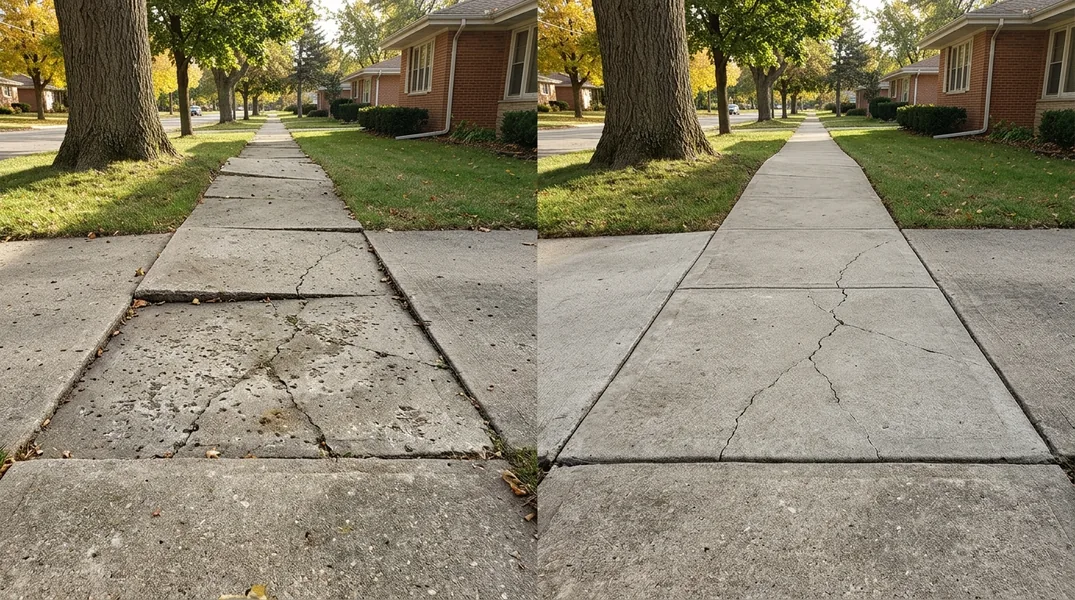
Understanding Frost Heave in Aurora's Climate
If you've noticed your concrete driveway cracking, heaving, or settling unevenly, you're not alone. Homeowners throughout Aurora face a unique geological challenge that makes concrete maintenance particularly demanding. The culprit is frost heave, a natural but destructive process that occurs when water in the soil beneath your concrete freezes and expands with tremendous force.
Frost heave happens in three stages. First, water in the soil absorbs moisture and begins to freeze during Illinois' cold winters. As the temperature drops further, that frozen water expands, pushing upward with pressure that can exceed several tons per square foot. Finally, when spring arrives and the ground thaws, the soil settles unevenly, leaving your concrete slab no longer level. This cycle repeats year after year, gradually causing visible damage like cracks, spalling, and those telltale bumps and dips that make your driveway unsafe and unsightly.
Why Aurora's Glacial Clay Soil Makes the Problem Worse
Aurora sits atop glacial deposits that left behind heavy clay soils, and clay is particularly vulnerable to frost heave damage. Unlike sandy or gravelly soils that drain water quickly, clay holds moisture like a sponge. When winter temperatures plummet, that trapped water freezes solid and expands, creating the perfect storm for concrete damage. The freeze-thaw cycle is relentless in Illinois, with temperatures regularly fluctuating above and below freezing from November through March, which means your soil is repeatedly expanding and contracting throughout the season.
Clay soil slab settling is one of the most common issues we address at Aurora Concrete. Homeowners often call us wondering why their once-smooth driveway now looks like a topographic map, with sections tilted at odd angles. The answer lies beneath the surface. The glacial clay that forms the foundation of most Aurora properties is highly susceptible to frost heave because it retains moisture and has poor drainage characteristics. This is why proper site preparation and drainage are critical when installing new concrete, and why existing slabs require proactive maintenance to minimize damage.
How Illinois Freeze-Thaw Cycles Damage Your Concrete
The Illinois freeze-thaw cycle isn't a one-time event each winter. Instead, it's a repeated pattern of freezing, thawing, and refreezing that can occur dozens of times between December and March. Each cycle stresses your concrete in different ways. When soil freezes and heaves, it pushes your slab upward unevenly. When it thaws, the slab settles, but not always back to its original position. Over multiple cycles, the cumulative effect is significant: cracks develop, joints separate, and the structural integrity of your driveway deteriorates.
Beyond frost heave, freeze-thaw damage also occurs within the concrete itself. If water penetrates the surface through small cracks or pores, it freezes inside the material and expands, creating internal stress. This process, called concrete spalling, causes the surface to flake and peel away. Deicing salts commonly used on Aurora roads accelerate this damage by drawing moisture into the concrete and creating a chemical reaction that weakens the material. The combination of frost heave from below and freeze-thaw damage from within makes Illinois winters particularly harsh on concrete structures.
Recognizing Frost Heave Damage: What to Look For
As a homeowner in Aurora, knowing the warning signs of frost heave damage helps you address problems early, before they become expensive. The most obvious indicator is uneven settling, where one section of your driveway sits noticeably higher or lower than adjacent sections. You might notice a ridge or bump where two slabs meet, or a depression where water pools after rain. These aren't cosmetic issues; they're safety hazards that can cause trips and falls, and they signal that structural movement is occurring beneath the surface.
Other telltale signs include cracks that form in a stair-step pattern, widening gaps between your driveway and garage foundation, or visible tilting of the slab. You might also notice that cracks reappear after you've had them filled, which suggests that the underlying soil movement hasn't been addressed. If you observe any of these conditions, it's time to call a professional. Aurora Concrete can assess the extent of the damage and recommend whether repair or replacement is the best solution for your property.
Concrete Repair and Prevention Strategies
Concrete Repair & Resurfacing options depend on the severity of frost heave damage. For minor cracks and spalling, resurfacing or patching can restore functionality and appearance. However, when frost heave has caused significant settling or structural movement, the problem often requires more comprehensive solutions. Some situations call for mudjacking or polyurethane injection, techniques that lift and level settled concrete by injecting material beneath the slab. In cases where damage is severe, replacement may be the most cost-effective long-term solution.
Prevention is always preferable to repair. When installing new concrete in Aurora, proper site preparation is essential. This includes removing topsoil, compacting the subgrade, and installing adequate drainage to keep water away from the soil beneath your slab. A well-designed base layer and proper slope for drainage significantly reduce the risk of frost heave damage. Additionally, using air-entrained concrete (which contains tiny air bubbles) helps the material withstand freeze-thaw cycles better than standard concrete. If you're planning a new concrete driveway or considering concrete patios, these preventive measures are worth the investment.
When to Call a Professional: Frost Heave Concrete Damage Aurora
Attempting to repair frost heave damage yourself usually leads to temporary fixes that don't address the underlying cause. While filling a crack might hide the problem temporarily, it won't stop the soil from continuing to heave and settle. This is why professional assessment is crucial. A qualified contractor can evaluate your soil conditions, drainage situation, and the extent of damage to recommend the most effective solution. At Aurora Concrete, we've spent years working with the unique soil and climate challenges that affect our community, and we know what works.
If you're experiencing frost heave damage or want to protect your concrete from future problems, don't wait until the damage worsens. Contact Aurora Concrete today for a free estimate. Call us at (331) 336-0875 to discuss your situation with an expert who understands Aurora's specific geological and climate challenges. Whether you need concrete repair, a new driveway designed to resist frost heave, or advice on preventive maintenance, we're here to help you protect your investment and keep your concrete safe and level for years to come.
Looking for a professional concrete contractor in Aurora? Aurora Concrete responds fast for all your concrete needs.
Get a Free QuoteOur services: Concrete Driveways · Concrete Patios · Stamped & Decorative Concrete